Download Report

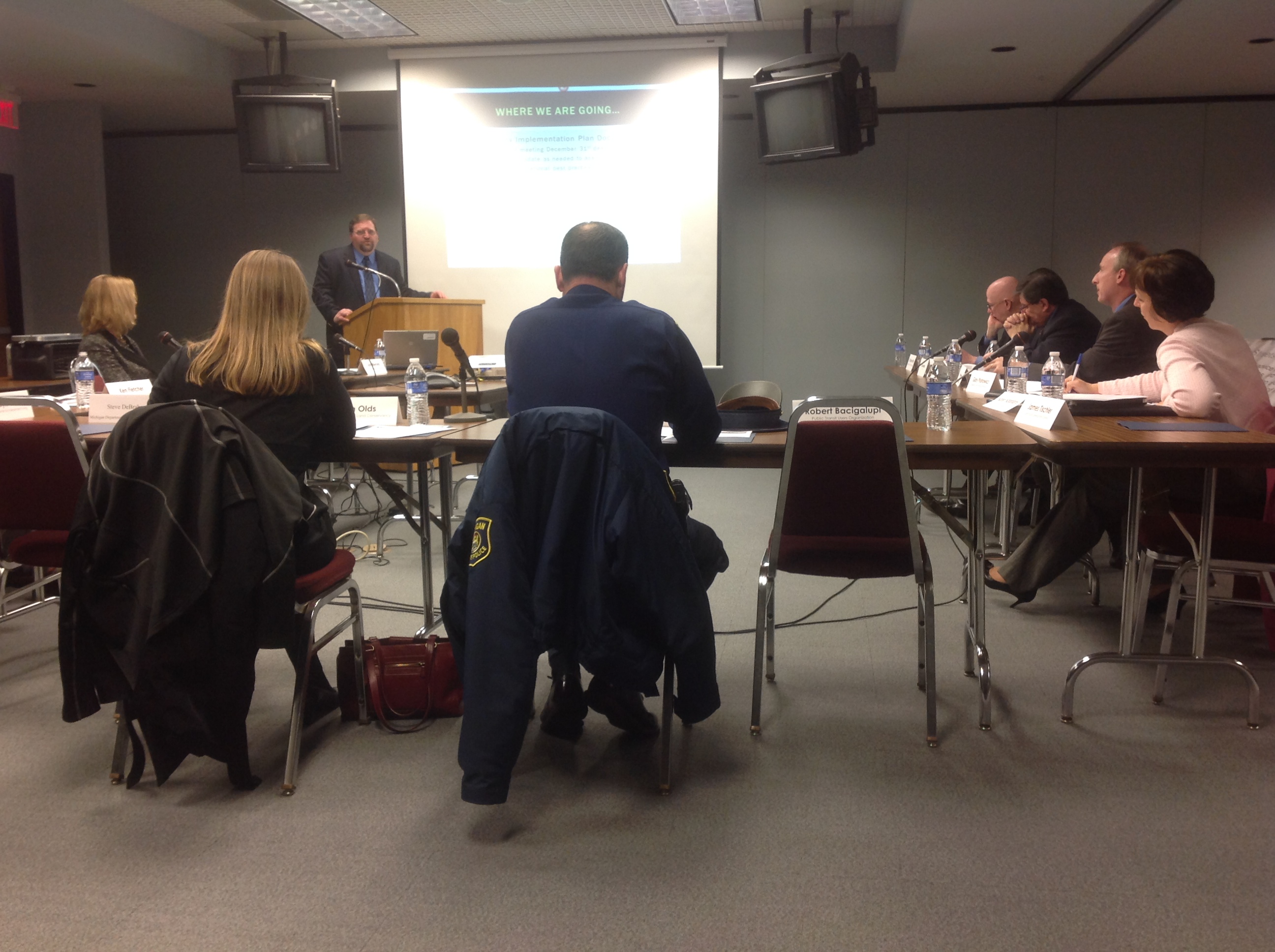
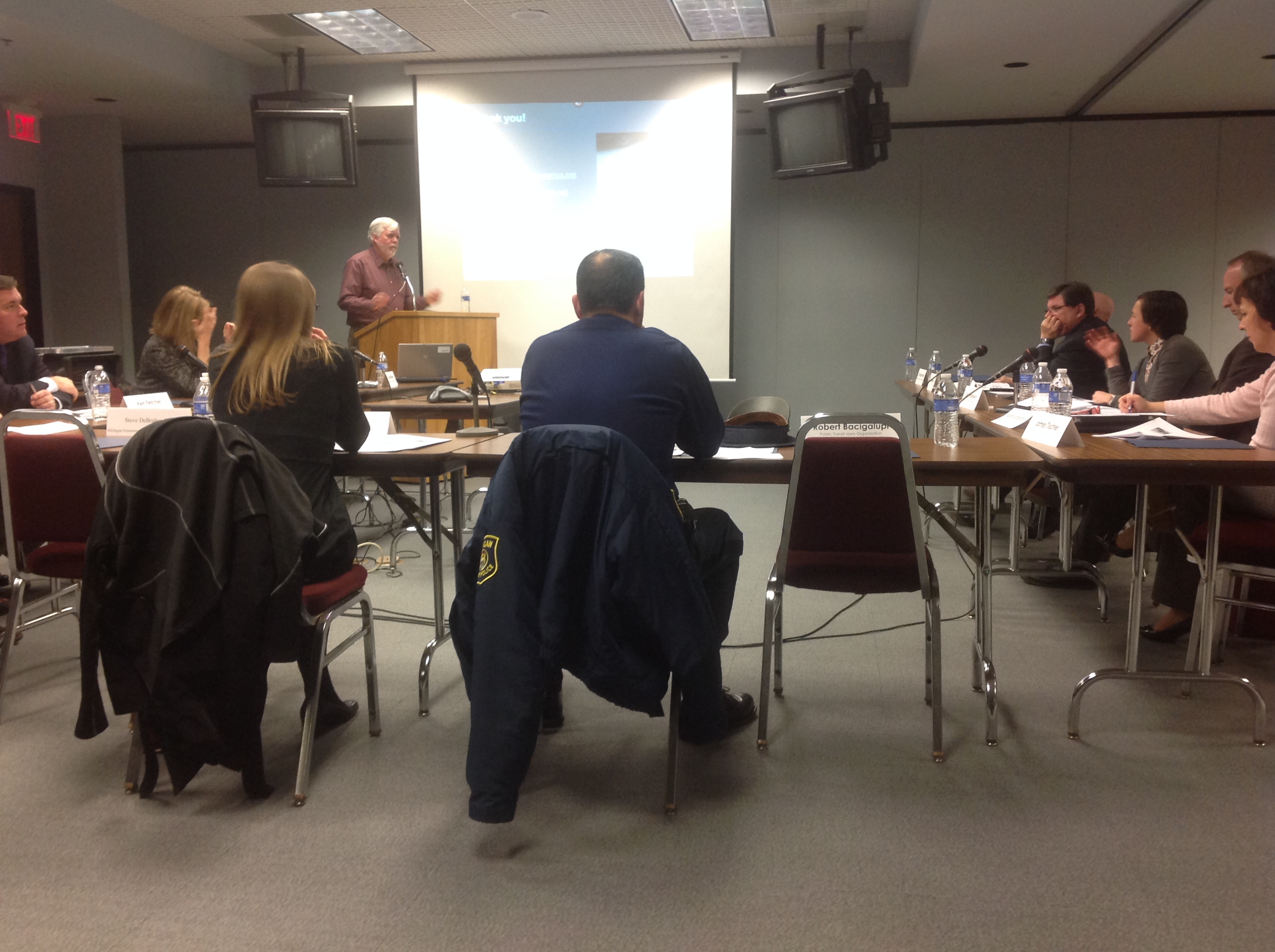
The Complete Streets Advisory Council met yesterday and announced the release of an annual report detailing progress made since Complete Streets legislation went into effect in Michigan on Aug. 1, 2010. The report is available online at: www.michigan.gov/completestreets or can be viewed in the PDF viewer below.

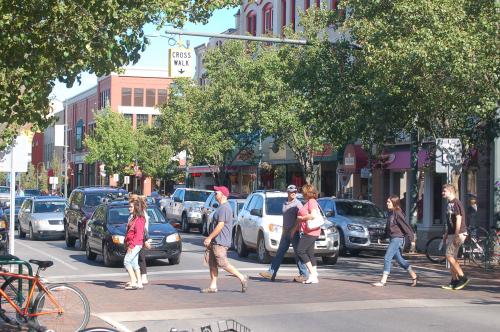
The Complete Streets law was enacted to encourage counties, cities, villages and townships to work cooperatively to incorporate policies that ensure that roads and streets take into account the mobility needs of all legal users, including bicyclists, pedestrians and those traveling by assistive devices such as wheelchairs. Public Acts 134 and 135 of 2010 also requires the State Transportation Commission to enact a Complete Streets policy for MDOT by August 2012.

The 18-member council worked together over the last year to develop a vision statement and sample policy language for the State Transportation Commission. The report released yesterday notes that 63 Michigan communities have enacted Complete Streets policies and/or resolutions as of November 2011, putting Michigan ahead of all other states.

Members of the Complete Streets Advisory Council represent road and transit agencies, state agencies, walking, biking and environmental organizations, senior citizen and disabled persons groups. The council’s role, according to law, is to provide education and advice to the State Transportation Commission, county road commissions and municipalities. More information is available online at: www.michigan.gov/completestreets.

The Complete Streets Advisory Council will meet at 2 p.m., Wednesday, January 25, at the Capitol Commons Center, 400 S. Pine St., in Lansing. The meeting is open to the public.

The 18-member council was appointed in accordance with Public Act 135 of 2010. The group’s role, according to law, is to advise the State Transportation Commission, county road commissions and municipalities on Complete Streets policies. The law also requires the State Transportation Commission to enact a Complete Streets policy by August 2012. A “complete street” refers to a roadway that provides appropriate access to all legal users, including motorists, bicyclists, pedestrians and those traveling by assistive devices, such as wheelchairs.

If you need special assistance to attend the meeting, contact Dorothy Thompson at 517-241-4890. The public also can submit comments prior to the meeting via e-mail to CompleteStreetsAC@michigan.gov or in writing to:

Michelle Myers,
Departmental Specialist
Intermodal Policy Division
Michigan Department of Transportation
P.O. Box 30050, 425 W. Ottawa
Lansing, Michigan 48909

Complete Streets Advisory Council members represent road and transit agencies, state agencies, walking and biking organizations, and environmental, senior citizens and disabled persons groups. More information is available online at: www.michigan.gov/completestreets

The Michigan Association of Planning, in partnership with the Michigan Safe Routes to School (SR2S) Program, the Michigan Department of Transportation (MDOT), the Michigan Department of Community Health (MDCH), and the Michigan Municipal League (MML), is launching its 3rd annual Transportation Bonanza!  This event was designed to bring together professionals from the fields of planning, education, transportation, health, engineering, natural resource and environmental protection, architecture, landscape architecture, and others to align around the topic of community building for health and accessibility.

We think that this year’s focus on the crossroads of schools and communities might appeal to your membership, constituents, partners, and/or staff. Transportation Bonanza 3 will deliver national and state experts to explore school facilities planning, how to implement Safe Routes to School successfully, collaborations between school districts and communities, public policies that impact the education system, and more.

Through valuable partnerships, the Transportation Bonanza series has continued to evolve from general transportation topics in its inaugural year to this year’s conference focusing on understanding the relationships between schools, community, and transportation; Safe Route to School; and Complete Streets. The benefits of attending are many and
include:

  • Learning about the intricacies and interconnectedness of communities, public health, schools, and transportation
  • Being better equipped to work with colleagues across multiple disciplines
  • The registration price is a good value for the information provided
  • Networking with colleagues across multiple disciplines

Just as the road networks we use to transport ourselves and our goods across multiple jurisdictions and cut through a variety of landscapes, so too do transportation planners, engineers, and advocates work with and through a variety of disciplines to enhance and improve our road systems. While each session is designed to relate to transportation in a unique way, from the relationship to schools to local government funding, there is an entire track dedicated to Context Sensitive Solutions and Complete Streets.

Date: February 16, 2012
Location: Lansing Center, Lansing
8:00 AM to 5:15 PM
Program: A full day of national experts and local perspectives, includes lunch, instruction, and refreshments.
Registration: $49 and online at http://planningmi.org/tb.asp

By: Myra Marie Tetteh, MPP
Detroit Complete Streets Coalition Coordinator

During a practice activity at the November events community members develop their vision of a better Detroit through complete streets infrastructure improvements.

The Detroit Complete Streets Coalition is continuing to grow. Current members include the following city departments: Department of Public Works (DPW), City Planning Commission (CPC), Detroit Department of Transportation (DDOT), Detroit Police Department (DPD), Planning and Development Department (PDD); community members; Wayne State University; and organizations such as the AARP, City Connect Detroit, Michigan Trails and Greenways Alliance, Southeast Michigan Council of Governments (SEMCOG), Transit Riders United (TRU), and Warriors on Wheels (WOW). The coalition has met monthly since May 2010 and shows no signs of slowing down.

Thus far, the coalition has held three community events and has participated in several others. The first event held back in March (2011) was attended by over 150 people and sponsored in part by Slow’s BBQ and the Gaelic League. The most recent events sponsored in part by the AARP and Detroit Food and Fitness Collaborative, held in early November (2011) were attended by approximately 100 people from various organizations and members of the community. The three events have educated residents on complete streets, highlighted local complete streets infrastructure, and allowed participants to give a glimpse of what improvements they wish to see.

The Detroit Complete Streets Coalition worked together to draft an ordinance to require complete streets planning for appropriate street projects. The ordinance when passed will be a big step for the city of Detroit to affirm its commitment to pedestrian and bicycle safety through infrastructure improvements for its residents and users. Currently, the ordinance is in the Law Department and following the official legal review the ordinance will be introduced by City Council and voted on for approval. It is our hope that though the city of Detroit is undergoing finance difficulties that this ordinance is not lost in the shuffle; improving health, safety, and community cohesiveness is a necessity in any economic time.

To learn more about the Detroit Complete Coalition or its work please contact us via email at info@detroitcompletestreets.org, visit us on the web at www.detroitcompletestreets.org, or like us on Facebook at the Complete Streets in Detroit page.

UPDATE: @WalkBikeRollMI We’re excited about the webinar, but it’s unfortunately not open to general public. Looking into ways to offer it more widely.

December 1, 2011, 2:00 p.m. Eastern

A common concern in transportation agencies is that implementing Complete Streets policies will cost too much. This in-depth, hour and a half long webinar will provide several strategies for responding to this concern, including examples and resources from communities that have overcome this issue. The webinar will provide Communities Putting Prevention to Work (CPPW) teams with information both about the low cost of many complete streets treatments, as well as ways to talk to transportation professionals about the added value and community support that result from complete streets implementation.

Click here to register.

LANSING, Mich. – On Thursday, November 10th, Gov. Rick Snyder appointed Carolyn Grawi of Ann Arbor to the Complete Streets Advisory Council.

The council’s role is to advise the State Transportation Commission and other agencies on the development of streets that provide appropriate access and promote safe and efficient movement of people and goods whether by car, truck, transit, assistive device, foot, or bicycle.

“Our state’s transportation network is a key component of Michigan’s reinvention,” Snyder said. “I am confident Carolyn will provide valuable insight to the council as it helps ensure accessible and varied transportation options across Michigan.”

Grawi is the director of advocacy and education at the Ann Arbor Center for Independent Living. She also is a field instructor for social work programs at Eastern Michigan University, where she works to ensure that the Americans with Disabilities Act provides access as needed to individuals with disabilities. Grawi previously worked to improve curb ramp accessibility in the cities of Ann Arbor, Monroe and Ypsilanti as well as to enhance accessibility throughout Ann Arbor Public Schools. She was awarded the University of Michigan’s James T. Neubacher Certificate of Appreciation for her work on behalf of people with disabilities. Grawi earned a bachelor’s degree in sociology and psychology from the University of Michigan and a master’s degree from the University of Michigan School of Social Work.

Grawi will serve the remainder of a three-year term expiring Sept. 30, 2013, and replaces Jim Magyar. The appointment is not subject to the advice and consent of the Senate.

#####

As a result of planning efforts for “Complete Streets,” the City of Lathrup Village has adopted an ordinance that will help facilitate future street, bike facility, and sidewalk improvements.

With assistance of Lathrup Village‐based Birchler Arroyo Associates, Inc., a Michigan planning firm that specializes in downtown planning and transportation consulting, the City Council and Planning Commission have been developing a Non‐Motorized Transportation Plan (NMTP), a Non‐Motorized Transportation Improvement Program (TIP), and a Complete Streets Ordinance. The purpose of these efforts is to guide the planning, design, construction and reconstruction of roadways, sidewalks, bicycle paths, and other transportation facilities, making them “Complete Streets.”

Recent legislation adopted in Michigan provides a method for achieving “Complete Streets” in communities across the state. “Complete Streets” is a relatively new term that describes a transportation network that provide safe and efficient access to users, whether they travel by car, truck, transit, assistive device, foot, or bicycle. In Lathrup Village, plans for street and sidewalk repairs are made annually. However, the City recognized the need to address non‐motorized transportation more fully and with an emphasis on improving the connectivity in and around the entire City, despite the physical boundaries of Southfield Road and I‐696, which bisect the City from east to west, and north to south, respectively.

The Reverend Oscar King III, a Lathrup Village Planning Commissioner, sums up the “Complete Streets” planning efforts by noting, “In my sense, it redefines Lathrup Village so that it becomes something more than somewhere people drive through, getting to somewhere else. It becomes a destination, a wellplanned destination, that can respond to what was, what is, and allow us to plan for the future.”

Birchler Arroyo Associates Inc. vice‐president Rod Arroyo agrees, “With the Complete Streets Ordinance, the City is taking a big picture approach to creating a complete transportation network for its residents and businesses. “ The new ordinance will require the City to consider how improvements can be made to the non‐motorized transportation network when other types of public infrastructure projects are undertaken.

The Planning Commission is holding a public hearing on the Complete Streets‐Non‐motorized Transportation Plan on November 8 and anticipates that the plan will be adopted as an amendment to the City’s Master Plan by December.

Download the Lathrop Village Complete Streets ordinance

*********

Lathrup Village, Michigan is in a highly desirable location in southern Oakland County. Conveniently located off I‐696, the City is within easy reach of the areas major cities and destinations. It has a population of over 4,500 and covers 1 1/2 square miles. The majority of its commercial uses are located on Southfield Road, an important north‐south arterial. Jeff Mueller is the City Administrator. Birchler Arroyo Associates, Inc. is a planning and transportation consulting firm located in Lathrup Village, MI. Since 1989, Birchler Arroyo Associates, Inc., has been a leader in community planning and transportation consulting in southeast Michigan. The firm’s award‐winning plans and tools have been recognized at the state and national levels for planning excellence. For more information on Birchler Arroyo Associates, Inc., please contact Rod Arroyo at 248.423.1776 or visit their website: www.birchlerarroyo.com

The Complete Streets Advisory Council will meet at 2 p.m., Thursday, Nov. 17, at the Capitol Commons Center, 400 S. Pine St., in Lansing. The meeting is open to the public.

The 16-member council was appointed in accordance with Public Act 135 of 2010. The group’s role, according to law, is to advise the State Transportation Commission, county road commissions and municipalities on Complete Streets policies. The law also requires the State Transportation Commission to enact a Complete Streets policy by August 2012. A “complete street” refers to a roadway that provides appropriate access to all legal users, including motorists, bicyclists, pedestrians and those traveling by assistive devices, such as wheelchairs.

If you need special assistance to attend the Nov. 17 meeting, contact Dorothy Thompson:
Michelle Myers,
Departmental Specialist
Intermodal Policy Division
Michigan Department of Transportation
P.O. Box 30050, 425 W. Ottawa
Lansing, Michigan 48909

Complete Streets Advisory Council members represent road and transit agencies, state agencies, walking and biking organizations, and environmental, senior citizens and disabled persons groups. More information is available online at: www.michigan.gov/completestreets

Killing Bicycle & Pedestrian Funding Won’t Fix Our Bridges
Contact Your Senators Today to Save Bicycle and Pedestrian Funding

Last month, we asked you to contact your U.S. Senators to oppose Oklahoma Senator Tom Coburn’s plan to strip funding from the Transportation Enhancements (TE) program, which is the main source of the federal investment for bike projects of all types. Bicycle advocates across the country generated more than 75,000 emails to Congress in 48 hours. This rapid and powerful grassroots response succeeded: Mr. Coburn withdrew his amendment and crucial funding for bicycling was preserved.

We are sorry to report today that walk/bike infrastructure funding is under serious and immediate attack again – this time in an amendment proposed by Senator Rand Paul (KY) that would redirect all funding for Transportation Enhancements to bridge repairs. Mr. Paul’s amendment is set for a vote on Tuesday, Nov. 1 when the Senate will finalize the transportation appropriations bill, setting funding levels for FY2012.

We need you to contact Senators Levin and Stabenow today and ask them to oppose this amendment. Here are four reasons why:

  1. Everyone deserves to be safe. We agree on the need to keep our bridges safe, but the lives of pedestrians and cyclists are important too. Thirteen people died when the Minneapolis bridge collapsed in 2007: since then, close to 20,000 pedestrians and 2,800 cyclists have died on our nation’s highways, largely as a result of poor highway design and a lack of safe non-motorized infrastructure – exactly what the enhancement program was created to fix.
  2. Reallocating walk/bike funding won’t make a dent in the cost of bridge repairs. If Sen. Paul’s amendment is successful, it would eliminate approximately $700 million in federal funding for FY2012 that is used to construct sidewalks, bike lanes, bike paths, trails and other infrastructure that makes it safe for bicyclists and pedestrians to get around. Even if every penny of these funds is diverted to bridge repairs, Senator Paul’s plan will still take 80 years to fix the backlog of bridge repairs we have today.
  3. Transportation Enhancements provide essential transportation benefits, like reducing road congestion, improving safety, getting people active, and creating more jobs per dollar than highway-only projects. Remember that the TE program represents less than two percent of the Federal transportation program and these projects help alleviate traffic congestion, improve safety, get people active, and create more jobs per dollar than highway-only projects.
  4. States don’t spend all the money they already receive for bridge repairs. Remember also that last year, states sent back to Washington $530 million of unspent bridge funds in rescissions – the states are leaving bridge repair funds on the table, unspent, year after year; they should at least spend these funds first.

If the Paul amendment succeeds, it will make it much more challenging to sustain funding for Transportation Enhancements, Safe Routes to School, and Recreational Trails in the long-term transportation bill that the Environment and Public Works Committee starts debating just 8 days later on November 9.

We must turn back any amendment to strip Transportation Enhancements.

Last month, more than 75,000 messages were sent to Senators to ask them to stand strong for Transportation Enhancements. That was an amazing turnout, but we must do better this time. Every time someone in Congress attacks bicycling and walking, we must push back even stronger than we did the time before. And, we will keep doing it until bicycle and pedestrian funding is protected.

This is the third time in a month that a small group of Senators have targeted Transportation Enhancements, using a different angle each time. It is a waste of the Senate’s time and taxpayers dollars to focus on this small and valuable program when we are in dire need of real and viable solutions to fix our failing transportation system.

Please contact your Senators today to ask them to vote against the Paul amendment (SA-821) to eliminate Transportation Enhancements. Then please forward this message to at least five others who care about the safety of people walking and bicycling on our streets.

Thank you for your help today, and for passing the call to action along.

As you may know, Governor Snyder will be delivering his special address on Michigan infrastructure next week. LMB is pleased to be working with the Transportation for Michigan Coalition (Trans4m) is holding a week of action this week to help change the conversation to that of providing innovative transportation solutions to rebuild our cities and our economy.

Tell Governor Snyder to move Michigan forward!

Week of Action: Help Transform Michigan’s Transportation Future

So far, most of the dialogue around Governor Snyder’s much awaited infrastructure plan has been about roads. While fixing our current transportation system is important, we need to acknowledge that strategic investment in rail, bus transit, and walking and biking through complete streets can help revitalize our cities and towns, reconnect people to jobs and opportunity, and reduce our transportation expenses.

Act now to tell Governor Snyder that you support solutions that will bring Michigan’s infrastructure into the 21st Century. There are easy ways you can tell the Governor that you want more than “business as usual” transportation planning and policy:

Ask Governor Snyder to consider the following solutions:

Invest in roads that let us walk and bike safely
Ensure the Michigan Department of Transportation adopts a statewide complete streets policy that is clear, comprehensive, and provides an effective framework for how state and local officials and citizens work together.

Invest in transportation choices
Allocate transportation funding strategically by investing in rail, public transit, and non-motorized options to build a 21st century multimodal transportation system.

Coordinate regional transit service
Establish a Regional Transit Authority that would coordinate and oversee regional public transit service in southeast Michigan. This would ensure greater efficiency and effectiveness for the region’s transit service.

Give regions options for pay for transit
Pass legislation that enables local communities and regions to choose from options to their fund their local transportation needs, with county or regional sales tax a top priority.

Invest in rail
Capitalize on the recent federal award by ensuring that our rail passenger rail infrastructure continues to expand and connect to cities and towns across the state.

These solutions will position Michigan for place-based economic development and result in vibrant places where people want to live and businesses want to locate.

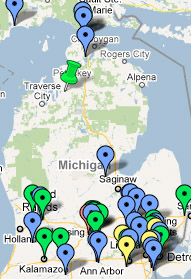
MI Complete Streets Policies / Nonmotorized Plan Finder

Follow Complete Streets on Twitter

Twitter Updates

National Complete Streets Coalition on Twitter

Share the Blog

Bookmark and Share

Michigan Complete Streets Photo Stream

DSC_0427

DSC_0425

DSC_0424

DSC_0423

DSC_0426

DSC_0420

DSC_0419

DSC_0418

DSC_0415

DSC_0417

More Photos

Categories

Follow

Get every new post delivered to your Inbox.